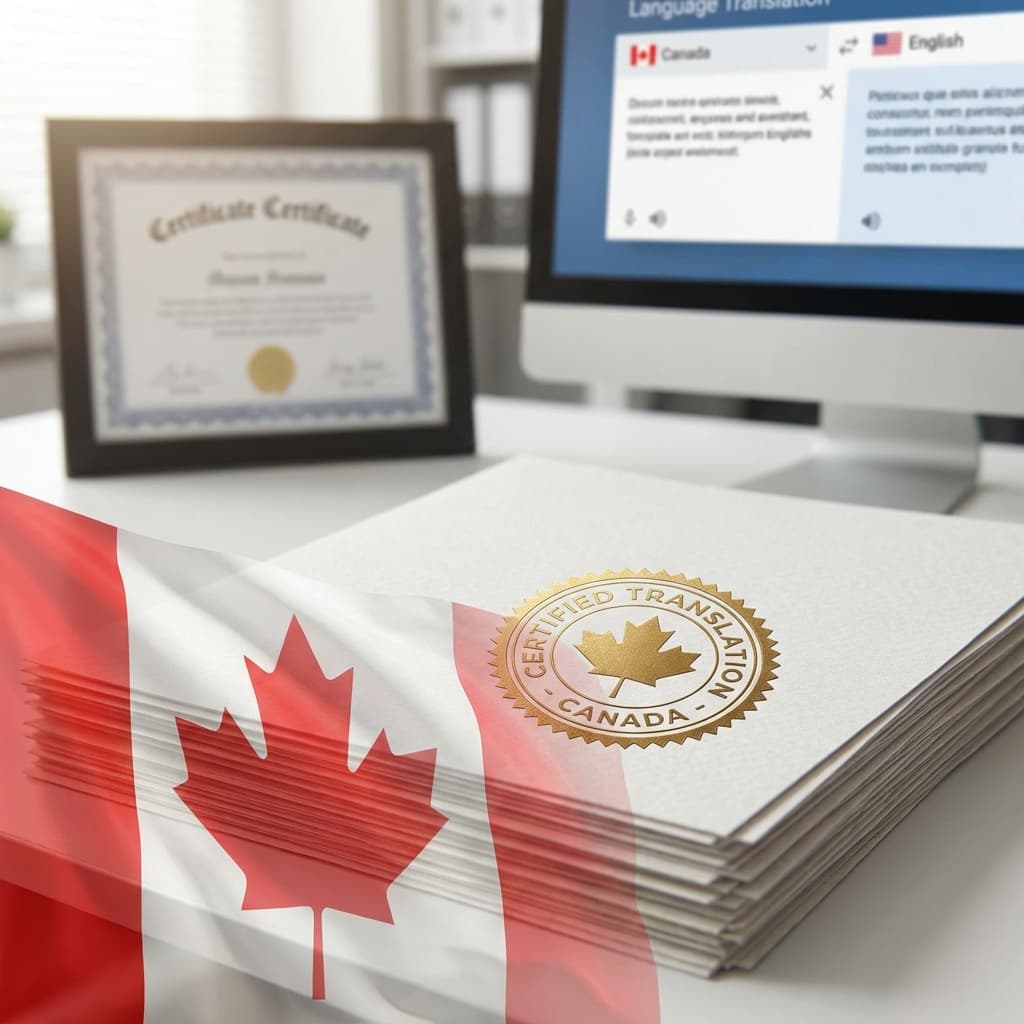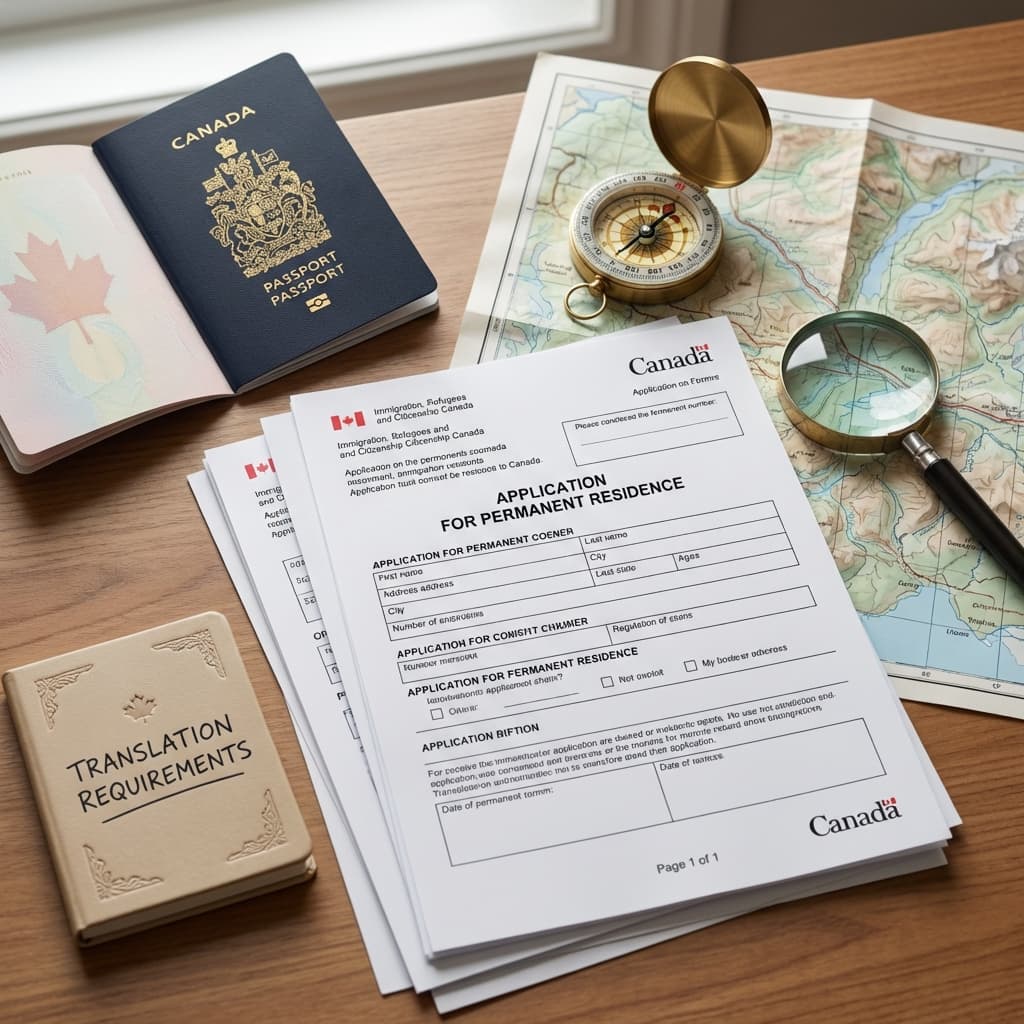

CRA Certified & Notarized Translation: Requirements, Standards, and How A2Z Language Hub Handles Your Request
If you have foreign-language financial documents and need to submit them to the Canada Revenue Agency (CRA), the translation has to be done right — or your filing could be delayed, rejected, or flagged for audit. This guide explains exactly what a CRA-compliant certified translation includes, when notarization is required, and how A2Z Language Hub prepares your documents so they are accepted the first time.
Which CRA documents commonly require certified translation?
Any foreign-language document that supports a CRA submission may need to be translated by a certified professional. The most common include:
- Foreign tax returns and notices of assessment
- T1 supporting documents from abroad — income statements, pension records, and investment holdings
- Foreign bank statements and financial account summaries
- Marriage certificates and divorce decrees, for spousal-benefit claims or marital-status changes
- Birth certificates and adoption documents, for child-benefit applications such as the Canada Child Benefit (CCB)
- Foreign business registration and incorporation documents
- Property ownership records and real-estate transaction documents
- Death certificates, for estate filings and survivor-benefit claims
- Employment contracts and foreign payroll records
- Educational credentials and proof of enrolment, for tuition credits and student-benefit claims
- Permanent residency and immigration-status documentation
CRA translation requirements: what you must provide
The CRA does not publish a single universal checklist, but it applies consistent standards across its assessment and audit processes. A compliant CRA translation submission includes the following.
1. Certified translation by a qualified professional
The CRA expects translations to be completed by a professional translator — ideally one certified by a recognized body such as the Society of Translators and Interpreters of BC (STIBC), the Association of Translators and Interpreters of Ontario (ATIO), or another provincial association. Certified translators are trained to render legal and financial terminology precisely, and their credentials can be independently verified.
2. Translator's declaration or Certificate of Accuracy
Every certified translation submitted to the CRA must include a signed statement from the translator confirming their full name and professional credentials, their competence in both the source and target language, and that the translation is a true, accurate, and complete rendering of the original. This declaration is a non-negotiable part of a compliant submission.
3. Both the original and the translated document
The CRA generally requires that you submit both the original foreign-language document and its certified English or French translation together — never the translation alone. Both should be clearly labelled and easy for a CRA reviewer to compare side by side.
4. Notarization — when it is required
In certain circumstances — particularly for high-value transactions, audit responses, estate filings, or when the CRA specifically requests it — a notarized translation may be required. Notarization involves a commissioned notary public or commissioner of oaths confirming the translator's identity and that the translation is genuine. A2Z Language Hub coordinates the full notarization process on your behalf.
5. No AI, machine, or uncertified translations
Important: The CRA does not accept Google Translate, DeepL, ChatGPT, or any other machine- or AI-generated translation. Submitting an uncertified or machine-translated document can get your claim flagged, delayed, or denied.
Special situations where the requirements get more complex
Foreign income and the T1 worldwide-income declaration
Canadian residents are taxed on worldwide income. If you earned income abroad — from employment, rental properties, pensions, or investments — and your supporting documents are in another language, you must provide certified translations when filing your T1 return or responding to a CRA inquiry. Errors or gaps in these translations can trigger reassessments.
CRA audit and reassessment responses
If you receive a CRA audit request or a Notice of Reassessment that references foreign documents, your response must include certified translations of every relevant document. Submitting poorly translated or uncertified material during an audit can escalate the review significantly — and the clock is usually already running.
Non-resident tax filings (NR4, NR6, Section 216)
Non-residents earning Canadian income from rental properties, pensions, or other Canadian sources may need to file with the CRA and submit supporting documents. Where any of those documents originate in a foreign language, certified translation is required.
How A2Z Language Hub handles your CRA translation request
A2Z Language Hub has extensive experience preparing certified and notarized translations for CRA submissions. We understand the documentation standards the CRA applies, and we make sure every translation we deliver is compliant, accurate, and ready to submit.
Learn more about our CRA-accepted certified & notarized translations for tax & financial documents.
Our CRA translation process
- Document assessment — we review your documents, confirm the language pair, identify handwritten sections, stamps, or seals that need special attention, and confirm whether notarization is required.
- Certified translator assignment — we assign a translator with specific expertise in legal and financial documents for your language pair — a specialist, not a generalist.
- Translation with full formatting — we translate every element of the document, including headers, footnotes, seals, stamps, and handwritten annotations, each clearly labelled.
- Certificate of Accuracy — the translator prepares and signs a formal declaration confirming their credentials and the accuracy of the translation.
- Notarization coordination (if required) — if your submission needs it, we coordinate with a commissioned notary public on your behalf.
- Final delivery — we deliver in the format you need (digital, print-ready, or both), with fast-turnaround options for urgent CRA deadlines.
What you can expect from A2Z
- Certified translators in 80+ languages — including rare and heritage languages common in immigrant communities
- Expertise in financial, legal, and government document translation
- Full compliance with CRA documentation standards
- A Certificate of Accuracy included with every translation
- A notarized-translation pathway available whenever it is required
- Confidential, secure handling of sensitive financial records
- Fast turnaround — including urgent options for audit deadlines
- Canadian-based professionals — no offshore, anonymous, or AI-generated work
Frequently asked questions
Does the CRA require a certified translation, or is any translation acceptable?
For foreign-language documents, the CRA expects a certified translation with a signed Certificate of Accuracy from a qualified professional translator. Machine-translated or self-translated documents are not acceptable and can delay your file.
Do I need to submit the original document as well as the translation?
Yes. The CRA generally wants both the original foreign-language document and its certified English or French translation, submitted together and clearly labelled so a reviewer can compare them.
When does a CRA translation need to be notarized?
Notarization is typically needed for high-value transactions, estate filings, audit responses, or whenever the CRA specifically asks for it. A2Z coordinates notarization for you when it applies.
How fast can A2Z Language Hub turn around a CRA translation?
Turnaround depends on length, language, and complexity, but we offer urgent options built specifically for audit and reassessment deadlines. Contact us with your documents for an exact timeline.
Ready to submit with confidence? Contact A2Z Language Hub today to discuss your CRA translation needs. We offer consultations, fast turnaround, and certified translations in 80+ languages — handled by Canadian professionals you can trust.
Related reading: Passport Canada Translation Requirements · Certified Transcription for IRCC & the Courts
Disclaimer: The A2Z Language Hub Blog is published to share knowledge, updates, and insights about language, translation, and interpretation services. All content is provided for general informational purposes only and should not be considered legal, financial, or professional advice. For certified or notarized translation requests or specific document requirements, please contact A2Z Language Hub directly.