

Do I Need a Certified Translator for Court Documents in Canada?
Do I Need a Certified Translator for Court Documents in Canada?
If you are involved in a legal proceeding in Canada and have documents in a language other than English or French, the short answer is yes — Canadian courts require certified translation of foreign-language documents before they can be entered as evidence or filed with the court. But the details matter. Which qualifications does the translator need? What types of court documents require translation? And how do requirements differ across provinces?
A2Z Language Hub has provided certified translation for court proceedings across Canada, from family law disputes to criminal cases to immigration-related litigation. Here is a complete guide to what you need to know.
When Do Canadian Courts Require Translation?
Any document submitted to a Canadian court that is not in the language of the proceeding (English in most provinces, French in Quebec and bilingual courts) must be accompanied by a certified English or French translation. This includes:
- Evidence documents — contracts, correspondence, financial records, text messages, social media posts
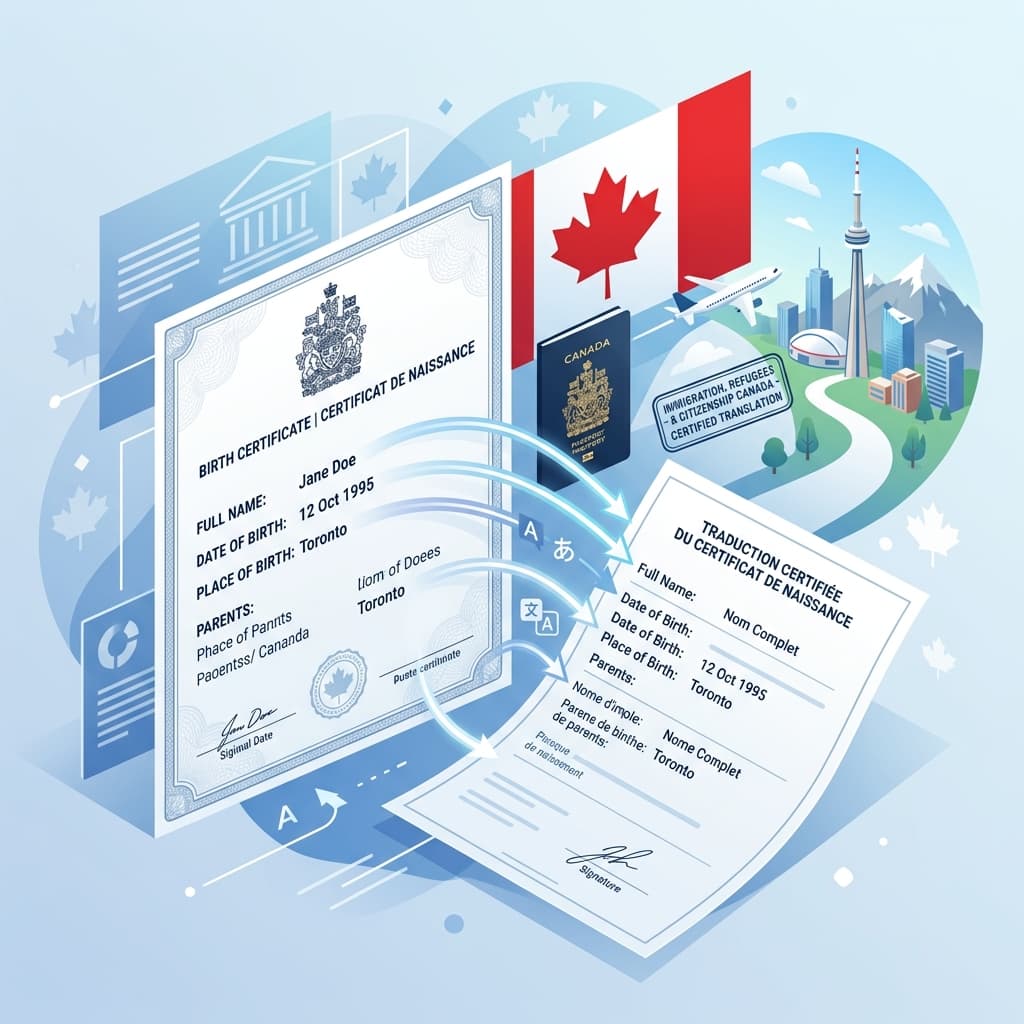
- Identity documents — birth certificates, marriage certificates, passports
- Foreign court orders — divorce decrees, custody orders, judgments from other countries
- Business records — corporate filings, tax documents, financial statements from foreign jurisdictions
- Expert reports and affidavits — statements from witnesses or professionals in another country
- Medical records — treatment records, psychological assessments, disability documentation
If the opposing party or the judge cannot read the document, it cannot be considered. Submitting untranslated documents is grounds for the other party to object and have the evidence excluded.
What Qualifications Must the Translator Have?
Canadian courts do not have a single national standard for translator qualifications, but they generally require that the translator:
Provide a Sworn Affidavit or Declaration
In most provinces, court-submitted translations must be accompanied by an affidavit of the translator. This is a sworn statement in which the translator declares:
- Their fluency in both the source and target languages
- That the translation is accurate and complete
- That they are competent to perform the translation
The affidavit is typically sworn before a commissioner of oaths or notary public. This is what distinguishes a court-ready translation from a standard certified translation.
Demonstrate Professional Competence
While not all provinces require the translator to hold a specific credential, courts give greater weight to translations prepared by:
- Members of CTTIC (Canadian Translators, Terminologists and Interpreters Council) or its provincial affiliates such as ATIO (Ontario), OTTIAQ (Quebec), or STIBC (British Columbia)
- Certified translators who hold recognized credentials in their language pair
- Translators affiliated with a reputable translation agency that provides quality assurance
In practice, if the accuracy of a translation is challenged by the opposing party, the translator's qualifications become critically important. A translation from a credentialed professional is far more defensible than one from an unvetted individual.
Types of Court Documents We Translate
At A2Z Language Hub, we handle a wide range of court document translations:
Family Law
- Foreign divorce decrees — needed when remarrying in Canada or for immigration purposes
- Custody and access orders from other jurisdictions
- Marriage contracts and prenuptial agreements
- Child support orders and financial disclosure documents
- Adoption documents from the country of origin
Criminal Law
- Foreign criminal records and police clearance certificates
- Witness statements and depositions in another language
- Evidence documents — communications, financial records, digital evidence
- Expert reports from foreign professionals
Civil and Commercial Litigation
- Contracts and agreements executed in a foreign language
- Corporate documents — articles of incorporation, shareholder agreements, board resolutions
- Financial records — bank statements, tax filings, audit reports
- Correspondence — emails, letters, and other communications relevant to the dispute
Immigration-Related Court Proceedings
- IRB hearing documents — evidence supporting refugee claims
- Judicial review applications related to IRCC decisions
- Federal Court submissions requiring translated supporting documents
Provincial Differences in Court Translation Requirements
While the general principle is consistent across Canada, there are some provincial variations worth noting:
Ontario
Ontario's Rules of Civil Procedure (Rule 34.07) require that any document in a language other than English be accompanied by a translation and an affidavit of the translator. The affidavit must be sworn before a commissioner of oaths and attest to the translator's competence and the accuracy of the translation.
British Columbia
BC's Supreme Court Civil Rules require translations of foreign-language documents filed as evidence. The translation must be certified by the translator, and the court may require an affidavit attesting to the translator's qualifications if the translation is challenged.
Alberta
Alberta's Rules of Court similarly require certified translations for foreign-language documents. The translator must provide a sworn statement of accuracy. Alberta courts may also require the translator to appear as a witness if the accuracy of the translation is disputed.
Quebec
In Quebec, documents in English may need French translation for proceedings conducted in French, and vice versa. Quebec recognizes members of OTTIAQ (Ordre des traducteurs, terminologues et interpretes agrees du Quebec) as qualified translators.
The Affidavit Requirement: What It Looks Like
A court-ready translation from A2Z Language Hub includes:
- The complete translated document — formatted to mirror the original as closely as possible
- A translator's affidavit — a sworn statement that includes:
- The translator's full name and qualifications
- A declaration that the translation is accurate and complete to the best of their knowledge
- The translator's signature, sworn before a commissioner of oaths
- A copy of the original document — attached as an exhibit to the affidavit
This package is ready to file directly with the court. No additional steps are required on your part.
Common Pitfalls With Court Document Translation
- Using an uncertified translator — courts may reject the translation or the opposing party may challenge it
- Missing the affidavit — a certified translation without a sworn affidavit may not meet court filing requirements
- Inaccurate legal terminology — legal documents require translators with subject matter expertise, not just language fluency
- Late submission — court deadlines are strict, and translation takes time. Starting late can mean missed filing dates and adjournments
- Partial translation — translating only excerpts rather than the full document can be challenged as selective or misleading
How Much Does Court Document Translation Cost?
Court document translation at A2Z Language Hub starts at $55 per page for certified translation. The affidavit and notarization component may involve an additional fee depending on the province and the notarization method. We provide a complete quote upfront so you know the total cost before proceeding.
Rush turnaround is available for urgent court deadlines. If you have a filing date approaching, contact us immediately and we will prioritize your project.
Work With Translators Who Understand Canadian Courts
Court document translation requires more than language skills. It requires an understanding of Canadian legal procedures, evidentiary standards, and the specific formatting courts expect. A2Z Language Hub provides court-ready translations with sworn affidavits, accepted by courts across British Columbia, Alberta, Ontario, and all other Canadian provinces and territories.
Get a quote today and ensure your documents meet every court requirement the first time. Our team of certified legal translators is ready to help with your case, whether it involves family law, criminal proceedings, civil litigation, or immigration matters.