

Notarized vs Certified Translation: What's the Difference and Which Do You Need?
Notarized vs Certified Translation: What Is the Difference?
If you have been asked to submit a "certified translation" or a "notarized translation," you may be wondering whether these terms mean the same thing. They do not. While both add a layer of credibility to a translated document, certified and notarized translations serve different purposes and are required by different institutions.
Understanding the distinction will save you time, money, and potential frustration when preparing documents for immigration, legal proceedings, education, or business purposes in Canada.
What Is a Certified Translation?
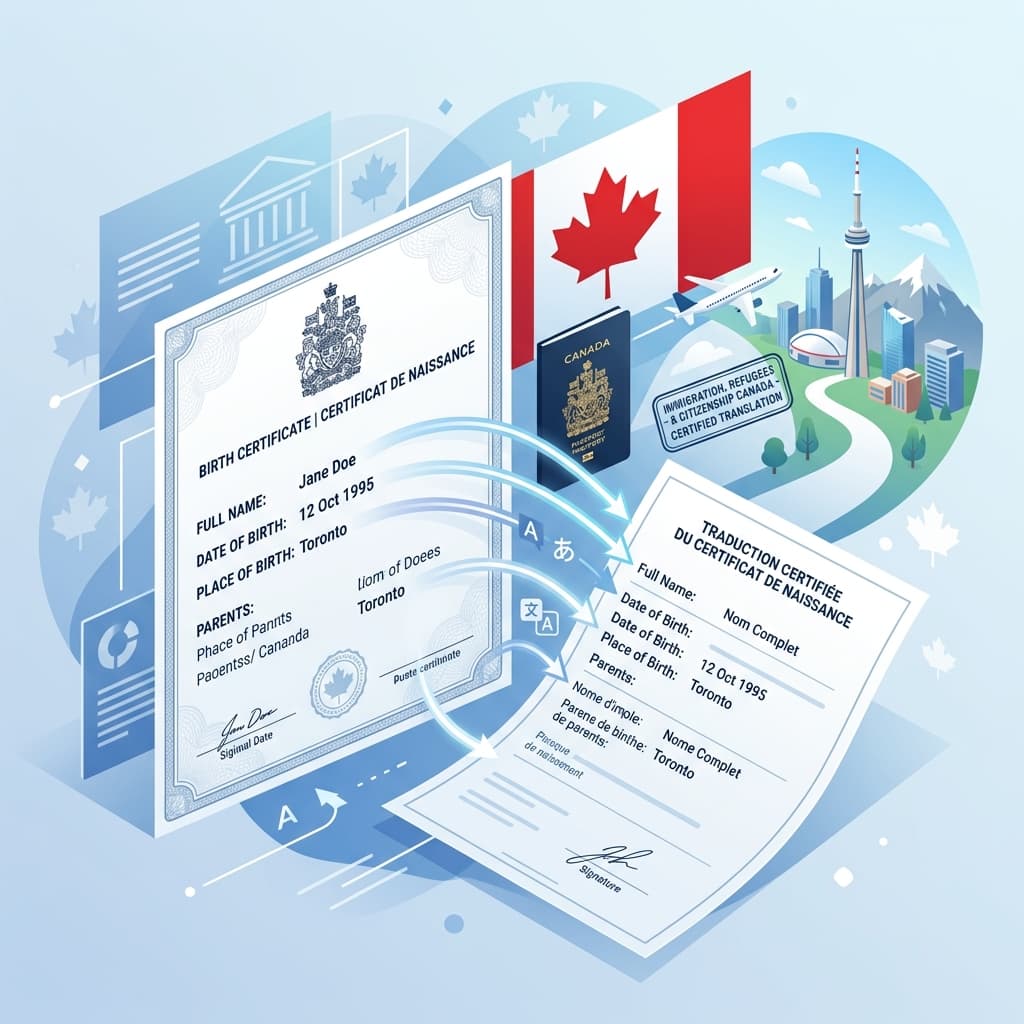
A certified translation is a translation accompanied by a signed statement from the translator (or translation company) attesting that the translation is accurate and complete. This certification statement typically includes:
- The translator's full name and signature
- A declaration that the translation is a true and faithful rendering of the original
- The date of translation
- The language pair (e.g., "translated from Arabic to English")
- The translator's contact information
In Canada, there is no single government body that licenses translators nationally. However, organizations like CTTIC (Canadian Translators, Terminologists and Interpreters Council) and provincial bodies like ATIO (Ontario) and OTTIAQ (Quebec) offer professional certification for translators.
At A2Z Language Hub, every certified translation includes a comprehensive certification statement that meets the requirements of IRCC, WES, IQAS, Canadian courts, and educational institutions.
What Is a Notarized Translation?
A notarized translation goes one step further. In addition to the translator's certification, the translation is sworn before a notary public or commissioner of oaths. The notary verifies the identity of the person signing the document (the translator) and applies an official seal or stamp.
It is important to understand what the notary does and does not do:
- The notary confirms the identity of the person who signed the certification statement
- The notary does not verify the accuracy of the translation itself
- The notary applies an official seal and signature that adds a layer of legal authentication
In some provinces, a commissioner of oaths can perform this function instead of a notary public.
When Do You Need a Certified Translation?
Certified translations are the most commonly requested type in Canada. You will need a certified translation for:
- IRCC immigration applications — permanent residence, citizenship, work permits, family sponsorship
- Credential evaluation through WES, IQAS, ICES, or CES
- University and college admissions
- Professional licensing with provincial regulatory bodies
- Employment verification by Canadian employers
For most immigration and education purposes, a certified translation is sufficient. IRCC, for example, does not require notarization — only a proper certification statement from a qualified translator.
When Do You Need a Notarized Translation?
Notarized translations are required in more specific situations, typically involving legal or official proceedings:
- Court filings and legal proceedings — some Canadian courts require notarized translations for evidence submitted in foreign languages
- Real estate transactions — property documents from abroad may need notarized translations
- Business contracts — international agreements sometimes require notarized translations for enforceability
- Government agency requests — certain provincial or municipal agencies may specifically request notarization
- Foreign affairs and apostille processes — documents being sent to other countries may need notarization as part of the authentication chain
If you are unsure which type you need, check with the receiving institution. When in doubt, a notarized translation covers both bases since it includes the certified translation plus the notary seal.
Cost Comparison
Here is a general comparison of costs for certified vs notarized translations in Canada:
| Service | Typical Cost | |---|---| | Certified translation (per page) | Starting at $55 | | Notarization add-on (per document) | $25 - $50 | | Notarized translation (total per page) | Starting at $80 - $105 |
The notarization fee is typically charged per document rather than per page, so a multi-page document only needs the notary seal once. For a complete breakdown of translation pricing, see our certified translation cost guide.
Who Provides Certified and Notarized Translations?
Certified Translations
Certified translations can be provided by:
- Professional translation companies like A2Z Language Hub
- Independent certified translators
- Members of professional translation associations (ATIO, OTTIAQ, STIBC)
The key requirement is that the translator is qualified, independent, and provides a proper certification statement.
Notarized Translations
For a notarized translation, the process typically works like this:
- A qualified translator completes the translation and signs the certification statement
- The translator (or a representative of the translation company) appears before a notary public
- The notary verifies the signer's identity, witnesses the signature, and applies the official seal
At A2Z Language Hub, we handle both steps in-house, so you receive your notarized translation without needing to coordinate between separate providers.
Common Misconceptions
"Notarized means more accurate"
Not necessarily. The notary does not review the translation for accuracy. A certified translation from a qualified, experienced translator is just as accurate as a notarized one. The notarization simply adds identity verification and a legal seal.
"I always need notarization for immigration"
This is false. IRCC does not require notarized translations. A properly certified translation is all you need for most immigration applications.
"Any bilingual person can certify a translation"
While IRCC does not require membership in a specific professional body, the translator must be competent, independent (not a family member), and willing to sign a certification statement attesting to accuracy. Using an unqualified person risks rejection.
How to Choose the Right Option
Follow this simple decision tree:
- Applying to IRCC for immigration or citizenship? A certified translation is sufficient.
- Submitting documents to WES, IQAS, or a university? A certified translation is sufficient.
- Filing documents in a Canadian court? Check with the court — notarization may be required.
- Dealing with real estate, business contracts, or foreign governments? Notarization is likely required.
- Not sure? Contact the receiving institution to confirm, or choose notarized translation to be safe.
For a dated comparison table — what each term means, who signs, and which authority (IRCC, WES, IQAS, ICBC, CRA and others) accepts which, with a link to each authority's own rule — see the certified vs. notarized vs. sworn translation reference page.
Get Your Certified or Notarized Translation Today
Whether you need a certified translation, a notarized translation, or both, A2Z Language Hub has you covered. We provide fast, accurate translations with proper certification and in-house notarization services.
Ready to get started? Request your free quote and let us know whether you need certification, notarization, or both. Explore our full range of translation services for all your document needs.